
Our Pipe Organ
Casavant Op. 2824 (1965)
History of Organs at St. Aidan’s
1910
Pump Organ
After the church building was completed, a pump organ (possibly a reed organ) was acquired.
Electric ‘Choralcello’ Organ
1914
First used on Sunday, June 14, 1914 a ‘Choralcello’ organ was inaugurated in order better support the choir of 60 voices. The instrument was an electric instrument, virtually unheard of for that time period. This instrument used a tone wheel, a handful of pipes, and piano strings. You can read more about the fascinating history of this instrument here.
Second Hand Instrument Purchased
1929
A second-hand instrument was purchased, likely built by Casavant Frères but it is difficult to know for sure.
Moller Console Purchased
1957
A console (where the organist plays from) built by Moller Organ Company was acquired from an instrument in the USA which was being decommissioned. This is the console which is still in use today.
Prior to 1966, the organ was located where the chapel is today. This work was temporarily undertaken by a company which went out of business, and so parishioners ended up moving some of the pipework to the new, and current, location.
Organ relocated to current chamber
1966
Substantial work added by Casavant
As part of the move, Casavant reworked much of the 1929 instrument, adding in a brand new Positiv division following the organ revival movement, which sought to make modern instruments able to more accurately play historical organ music.
Upgrades and rebuilding by Alan Jackson Company
1982
Much of the key action (relays that play notes) and stop action (which control the sounds) were re-leathered and reworked by Alan Jackson. Some additions and changes were made between 1982 and 2008, including the replacement of some stops in the Swell Division.
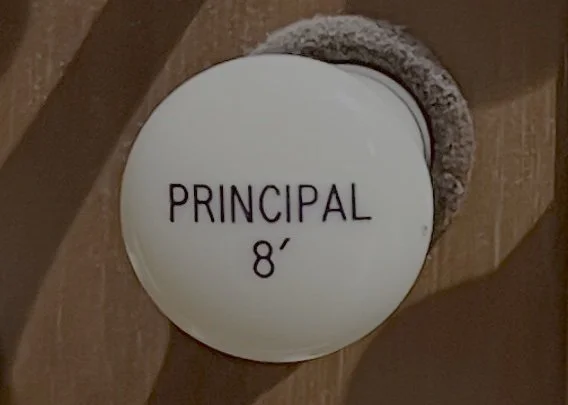
The Stoplist
| Great | Swell | Positiv | Pedal |
|---|---|---|---|
| 16' Quintaton | 16' Basson | 8' Erzahler | 32' Resultant |
| 8' Principal | 8' Trompette | 8' Gedeckt | 16' Bourdon |
| 8' Rohrflote | 8' Viole de Gambe | 4' Principal | 16' Quintaton (from GT) |
| 4' Octave | 8' Viole Celeste | 4' Koppelflote | 8' Principal |
| 4' Blockflote | 8' Hohlflote | 2' Octave | 16' Bombarde |
| 2 2/3' Spitzquinte | 4' Prestant | 2' Bachflote | 8' Trompette |
| 2' Super Octave | 2' Doublette | 1 1/3 Quintflote | |
| IV Mixture | IV Mixture | II Sesquialtera | |
| Tremolo | IV Scharff | ||
| 8' Krummhorn |
The need for restoration.
Console modification
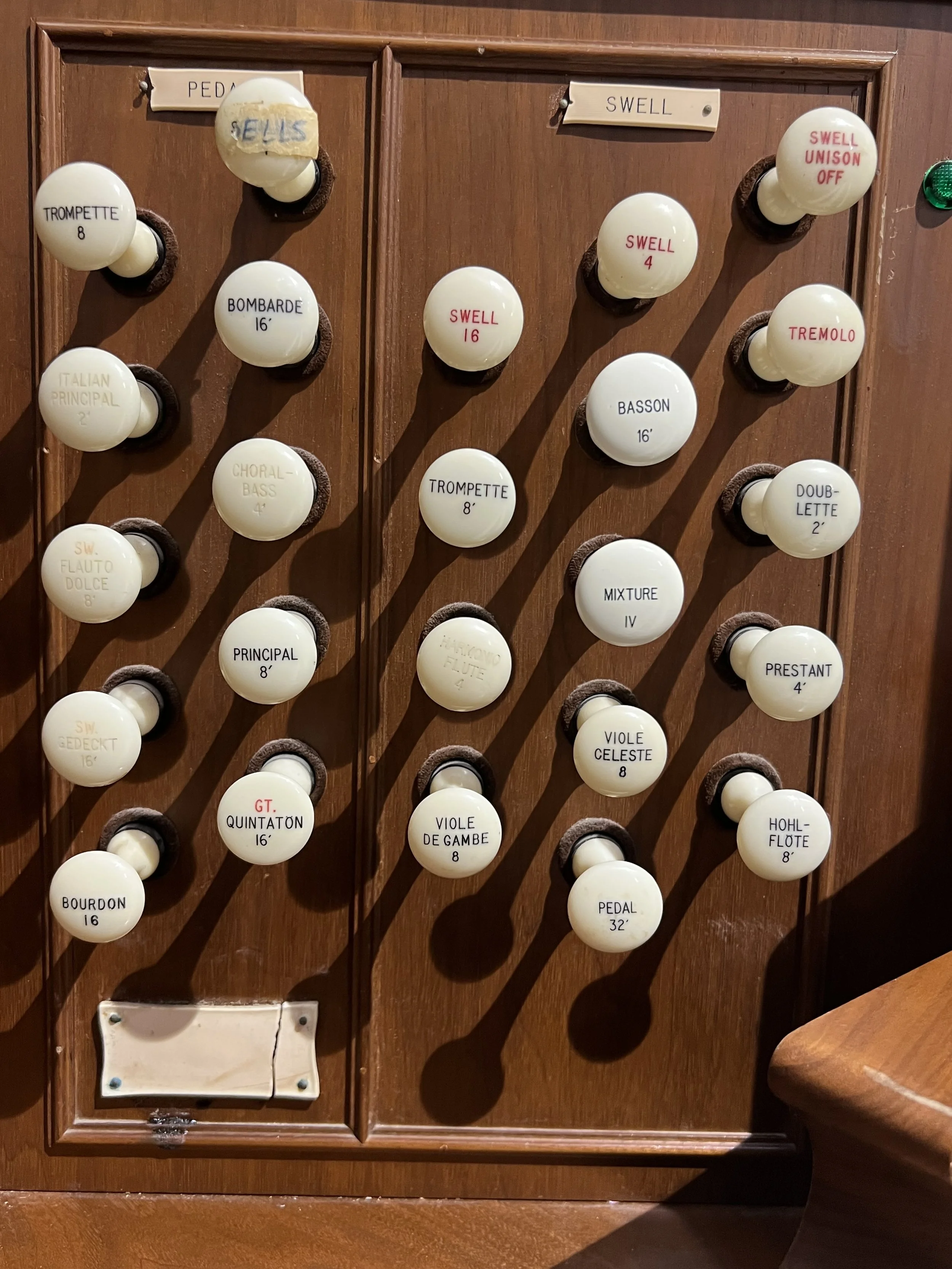
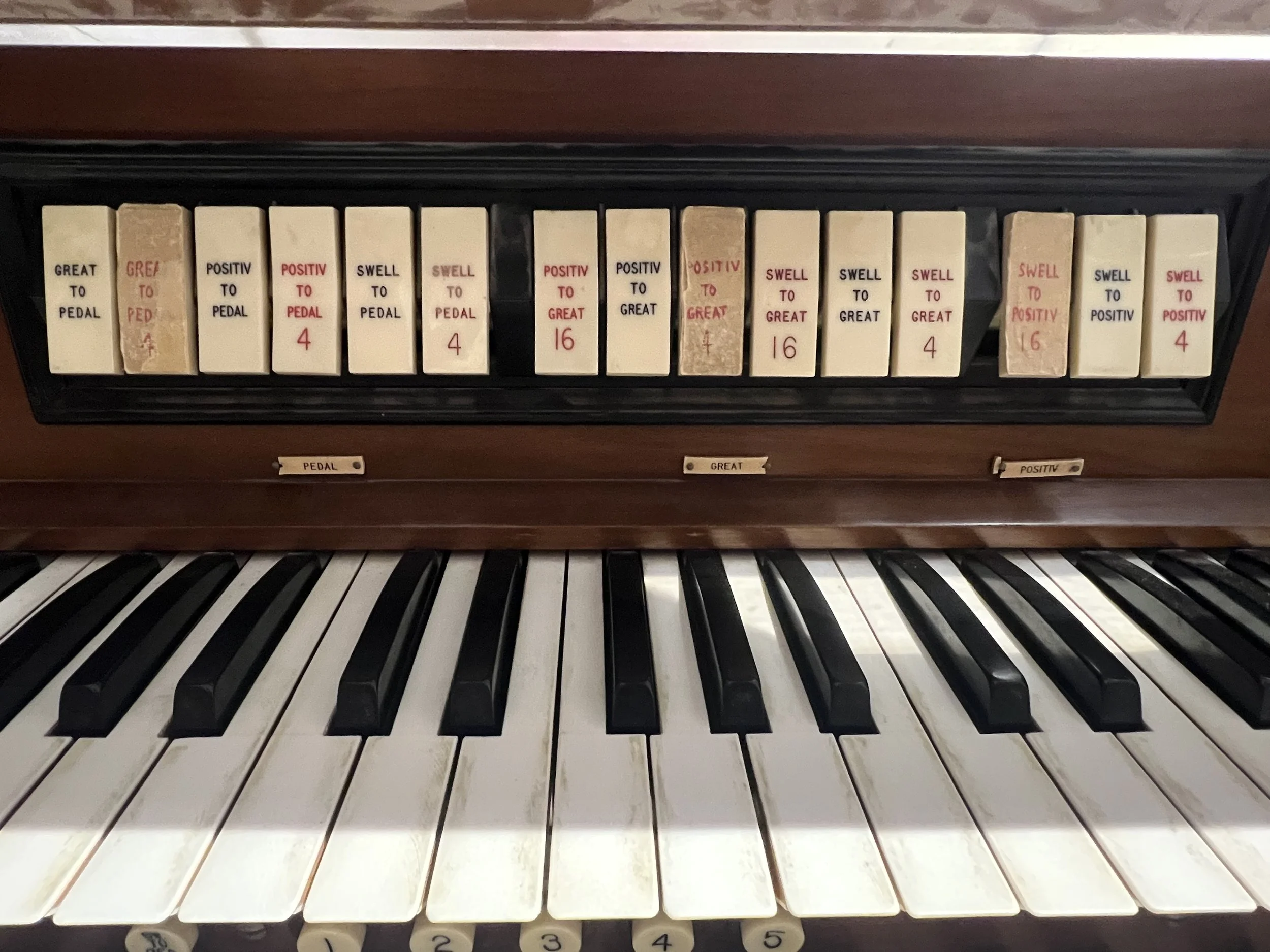
The existing console is retrofitted to the pipe work which has been changed over the years. Many of the stops are inaccurate or in the wrong place (see bells and 32’ pedal).
Electrification Requirements
By the mid 1980s, console electrification was standard. Sadly the console at St. Aidan’s has never been updated and the old electro-pneumatic mechanisms within the console have begun to fail.
Cleaning
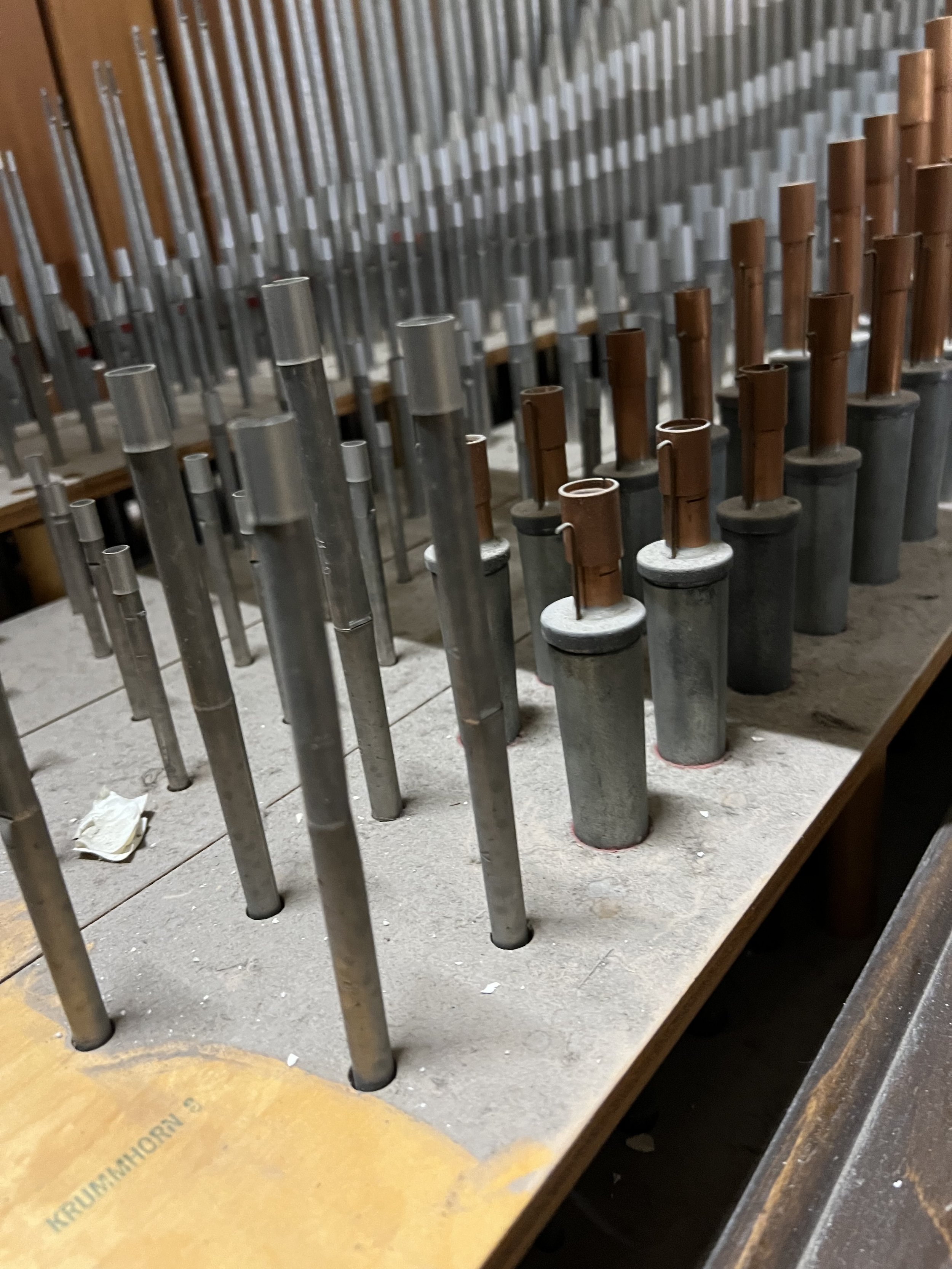
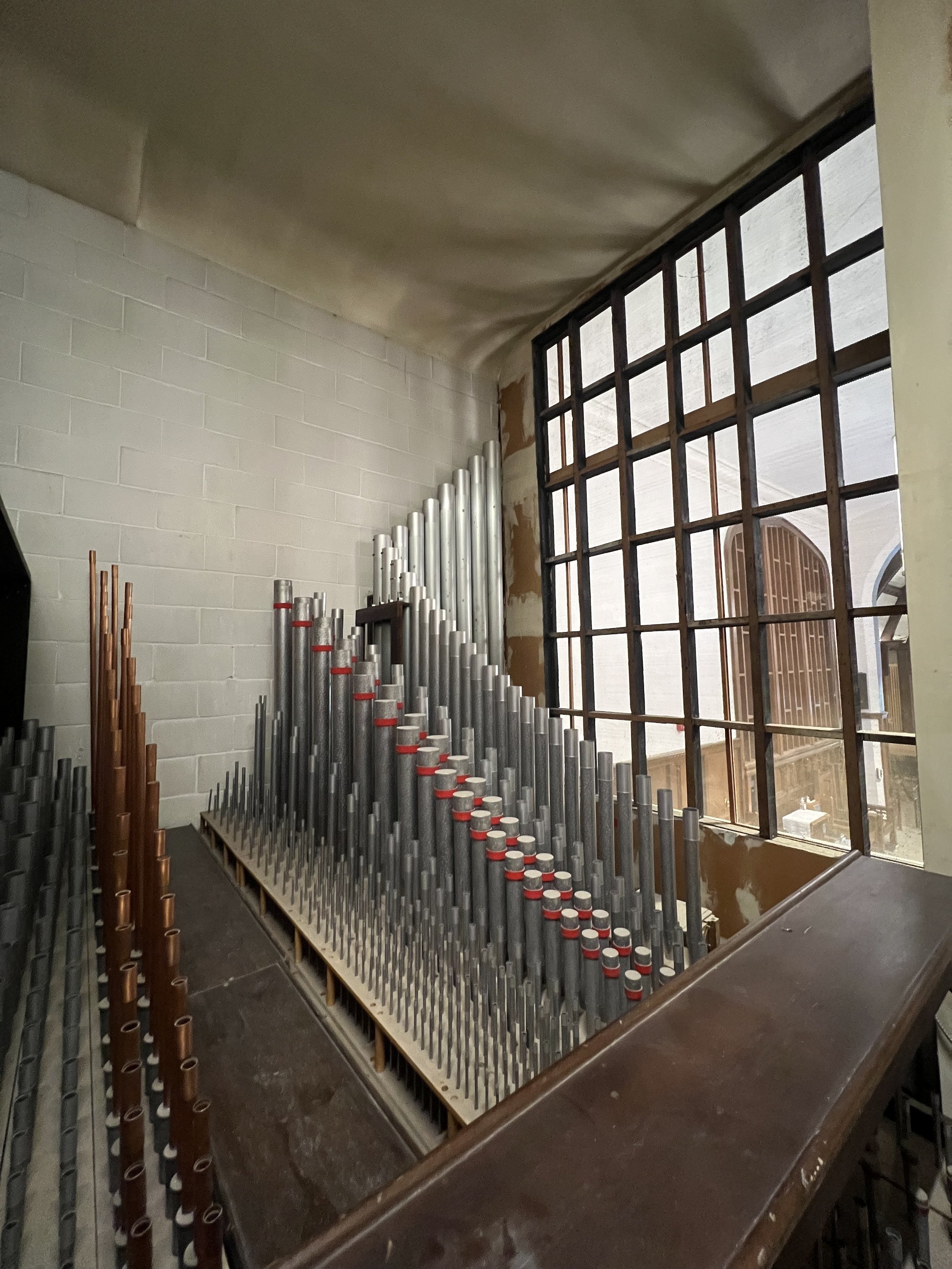
Over the years dust collects on top of all surfaces of the organ. This dust is particularly problematic for tuning as it can impact the speech of the pipes.
Damaged Pipework
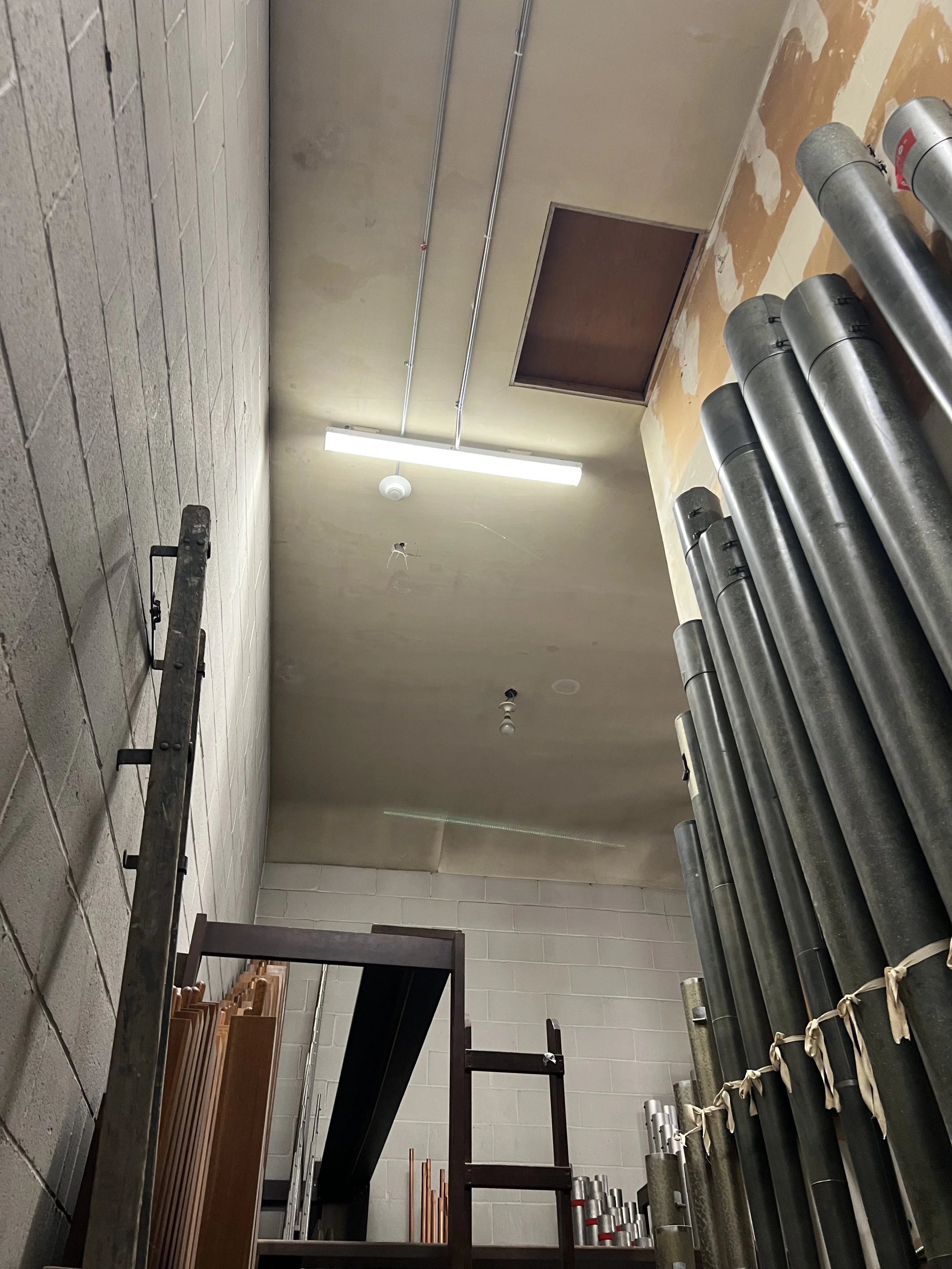
Access to the flat roof used to be via a ceiling hatch in the organ chamber. Some pipework has been damaged over the years either by contractors or others in the chamber.
Outdated Electrical
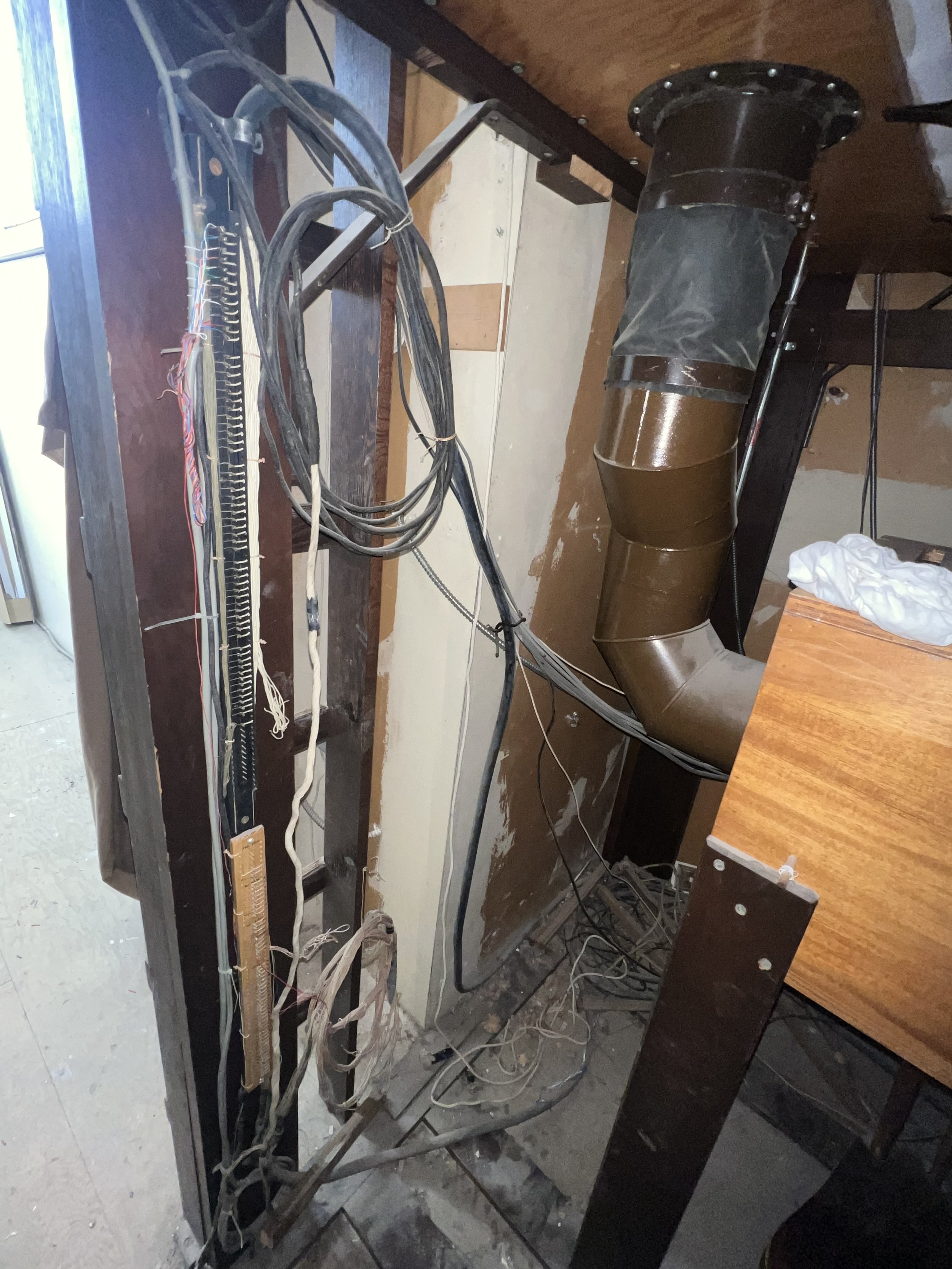
All of the wiring within the existing instrument needs to be updated. Most of it is low voltage but should still be brought up to modern standards.
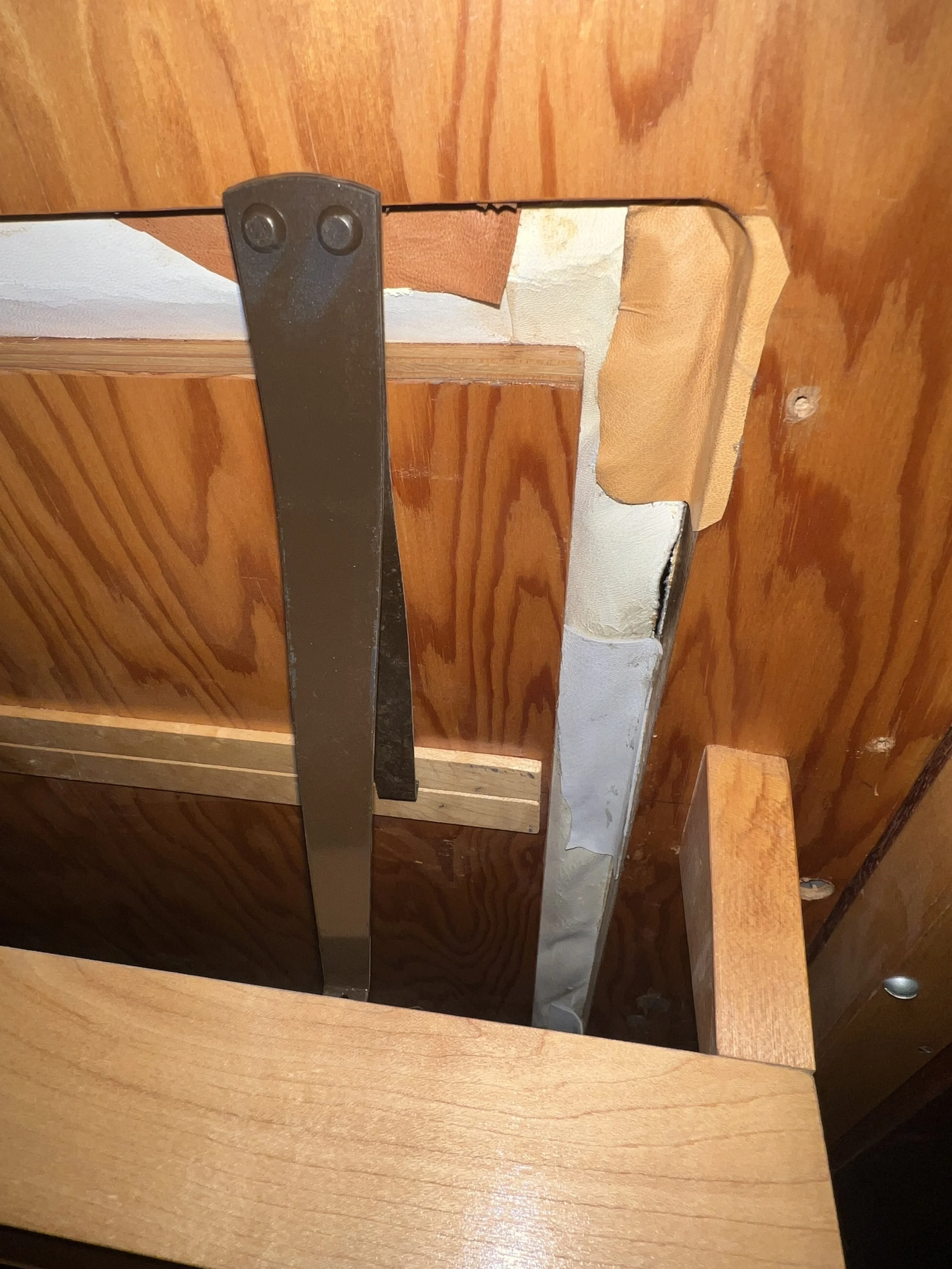
Worn out leather
Many of the moving components in the wind system are made of leather. Over time, dramatic swings in temperature and humidity wreak havoc and these components fail. These air leaks grow over time and can become catastrophic.
Ease of access
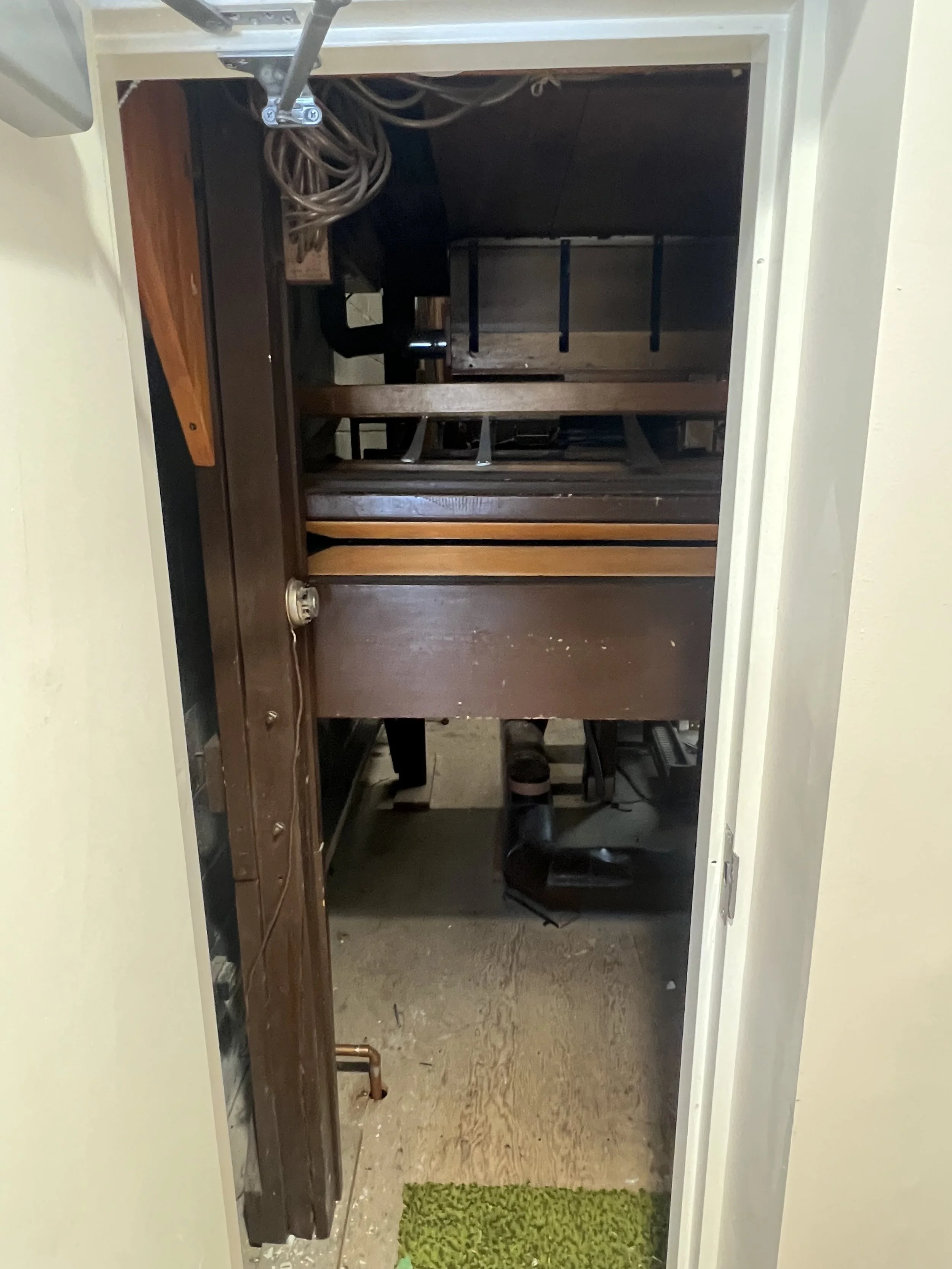
Accessing and maintaining the existing instrument requires technicians to crawl into spaces. Old ladders built into the instrument are not reliable and there is not ample room to be able to adequately tune and regulate the instrument.
Organ Chamber updates
Much of the organ chamber remains unfinished. Lighting is inadequate, there are holes in the floor, and there is no insulation (or properly designed heating) in the space.
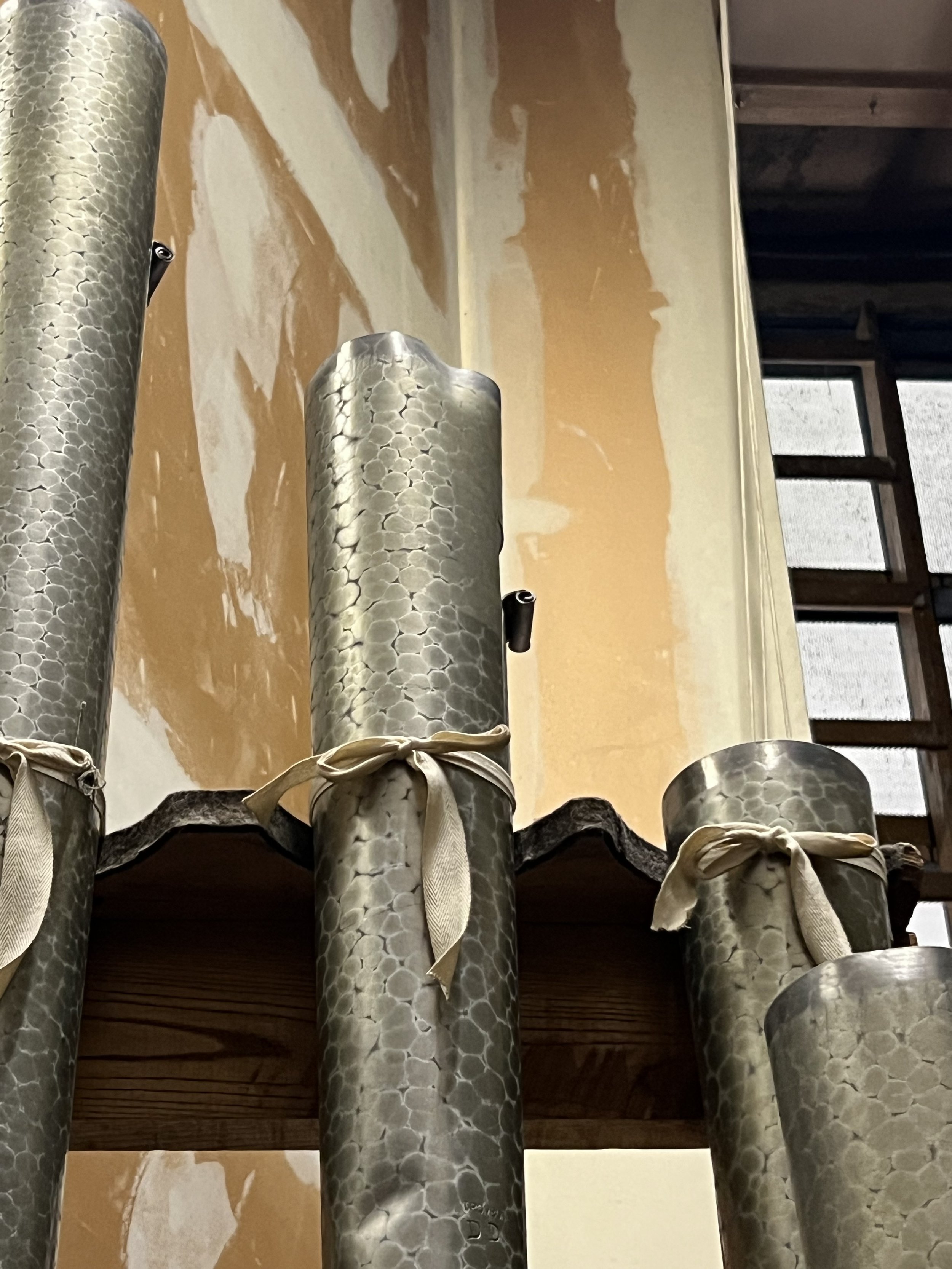
The path forward.
In short, we are presented with three options:
Commission a new instrument to replace the existing instrument;
Replace the instrument with an existing but well-maintained instrument from another church; or
Repair and restore the existing instrument.
In terms of costs, the first is likely not under serious consideration; a new pipe organ would easily be upwards of $1.5 million. This leaves two remaining options. In terms of the third option, we must consider not only the scope of work that would be needed to restore the instrument to suitable condition, but also the value and quality of the existing instrument.
Our pipe organ has undergone piecemeal work over the course of its life: replacing the console from an instrument in the USA, adding and replacing pipework in different styles, and retrofitting soundboards and chests from another instrument just to name a few.
Our hope for our way forward is simply an instrument that is reliable, cohesive, and can enhance our existing worship life by supporting congregational singing while leaving the door open to new ways.
If you’re interested in joining the organ restoration committee, please contact Michael Pirri: